
PMU: 110 YEARS OF HISTORY, THE FUTURE IN OUR ROOTS TO RENEW THE CHURCH S MISSIONARY AWARENESS
The concluding conference of the international gathering marking the 110th anniversary of the Pontifical Missionary Union renews the charism of Blessed Paolo Manna: a Church that is entirely missionary, united in Christ and capable of renewing evangelisation throughout the world.
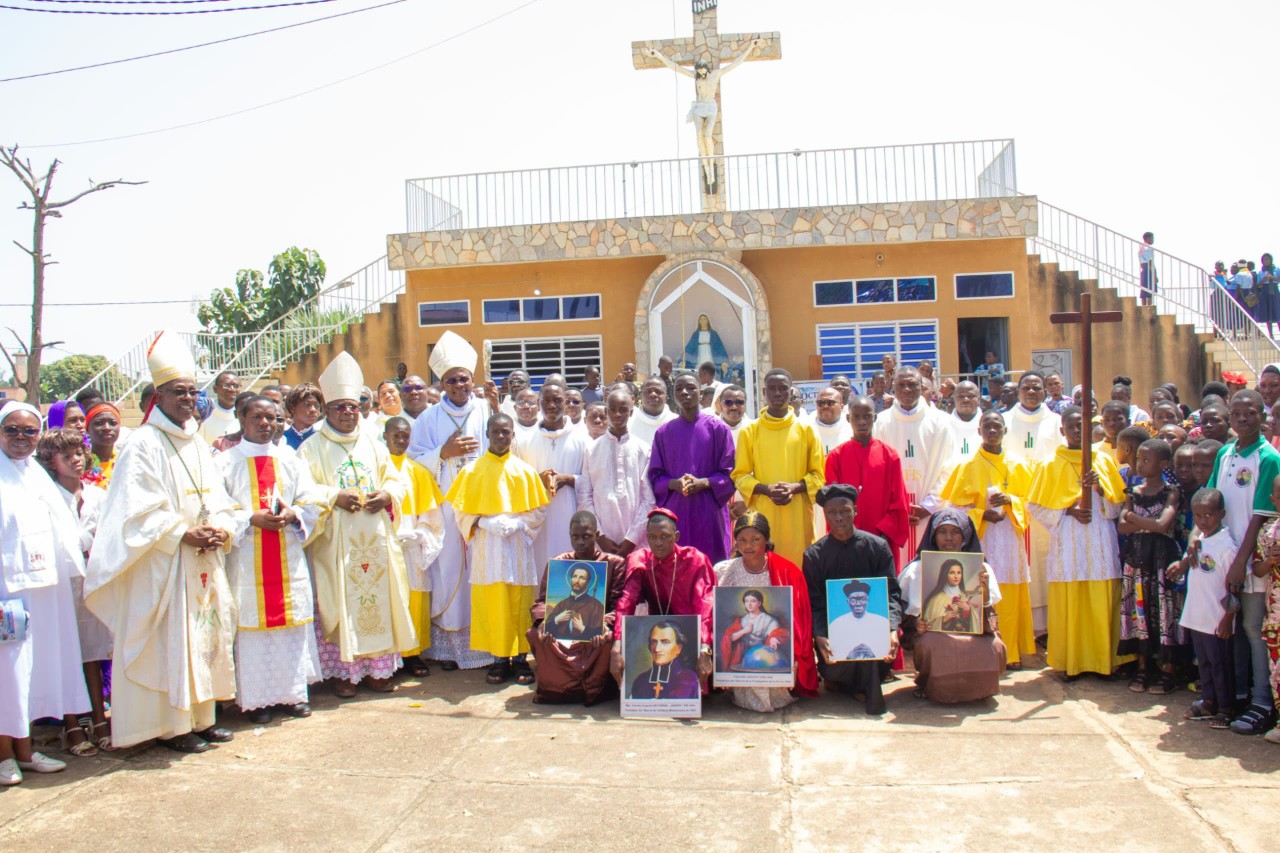
“The future in our roots. The Missionary Union’s renewed commitment in accordance with the guidance of Popes Francis and Leo XIV.” This was the theme of the concluding conference of the international gathering for the 110th anniversary of the Pontifical Missionary Union (PMU), founded on 31 October 1916 by Blessed Paolo Manna. The event was not only an opportunity to remember and give thanks for the journey travelled, but also a chance to relaunch the Church’s missionary vocation with renewed energy.
Under the title “Caritas Christi Urget Nos: Towards a New Missionary Era for the Church”, the concluding session of the conference reaffirmed the PMU’s profound identity, called to be, in the words used by Paul VI in 1966, the “soul of the other Pontifical Mission Societies”. This mission is not limited to fundraising; its heart lies in spiritual animation and in forming missionary awareness throughout the entire People of God.
The roots of a universal charism
The history of the Pontifical Missionary Union is rooted in the context of the First World War. Established as the Missionary Union of the Clergy, with the approval of Benedict XV, the Society initially sought to awaken missionary awareness among bishops and priests. From the very beginning, however, its horizon was universal: “The whole Church for the conversion of the whole world.”
The recognition of its “Pontifical” title by Pius XII in 1956, followed by Paul VI’s subsequent definition, progressively highlighted its vocation to involve the entire ecclesial community.
Today, the PMU is called to awaken in every baptised person the awareness that mission is not an additional activity of the Church, but belongs to its very nature. The missionary dimension must permeate theology, catechesis, youth ministry, priestly and religious formation, family life, parishes and diocesan plans.
The point, therefore, is not to multiply initiatives, but to make every ecclesial activity missionary.
A Church in permanent missionary conversion
The conference strongly recalled the guidance of the magisterium of Pope Francis and Pope Leo XIV, emphasising the need for permanent missionary conversion.
In his apostolic exhortation Evangelii Gaudium, Pope Francis reminds us that every baptised person is a missionary disciple. Mission, therefore, is not reserved for specialists or for people with particular vocations, but involves every member of the Church.
The Pope’s addresses of 12 May 2022 and 25 May 2024 also highlighted several fundamental pillars for the journey of the Pontifical Mission Societies: missionary conversion, communion and prayer, the practical expression of charity, creativity and perseverance.
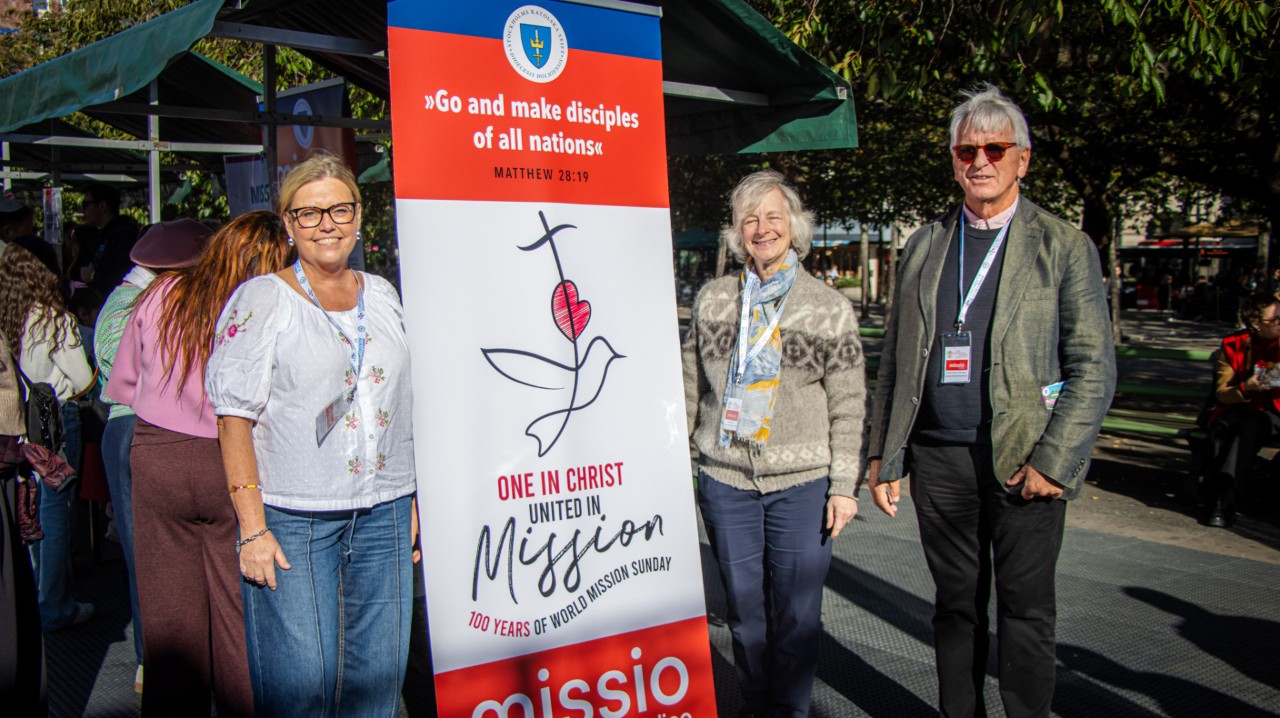
In continuity with this perspective, Pope Leo XIV encouraged the PMU, on its 110th anniversary, to continue its vocation of fostering and forming the missionary spirit in everyone, recalling the theme of unity in Christ and concrete collaboration among all the baptised. The message for the 100th World Mission Day, “One in Christ, United in Mission”, invites us to overcome every form of individualism and fragmentation.
The motto “In Illo uno, unum” thus becomes a practical guiding principle for living the mission in ecclesial communion.
Formation and animation: the heart of mission
One of the central points to emerge from the conference concerned ongoing missionary formation. The PMU is called to disseminate widely the Pope’s annual message for World Mission Day, published in the first months of the year in preparation for the October celebration.
The aim is to encourage Christian communities to read and assimilate the message in depth, transforming it into concrete programmes of biblical, theological and pastoral formation.
Courses, webinars, study seminars and missiology programmes all contribute to this effort, together with the missionary biblical commentary on the Sunday Gospel, available in five languages.
Particular attention is also being devoted to making formation programmes more international, with courses based on the Pope’s annual message offered in various languages.
Five priorities for a new season
The PMU’s 110th anniversary was presented as the beginning of a new phase, marked by concrete goals and a stronger focus of resources and efforts.
Five operational priorities were outlined.
The first concerns a new campaign to recruit members through close collaboration between the international secretariat and the various national and diocesan directors of the Pontifical Mission Societies. The aim is for the Pontifical Missionary Union to build a universal network of missionary disciples, invisible yet tangible. Membership is not understood as a mere organisational act, but as a spiritual choice and a missionary responsibility rooted in baptism, prayer, formation and collaboration.
The second priority is to promote ongoing missionary formation that is accessible and up to date, based on the Pope’s annual message and capable of addressing the difficulties pastoral workers may face in reading and assimilating it.
The third concerns the care and accompaniment of the national and diocesan directors of the Pontifical Mission Societies and their collaborators, who are called to animate and promote missionary responsibility in local Churches.
The fourth aims to strengthen bishops’ ongoing missionary formation, in synergy with the competent Dicastery.
The fifth, finally, calls for stronger collaboration with local Churches and missionary institutes, overcoming fragmentation and individualism through shared projects and creative forms of communication.
A mission involving the whole Church
The conference renewed a vision that looks to the future without forgetting its origins: “The whole Church for the conversion of the whole world.”
This perspective asks every community to rediscover its missionary task through ongoing formation, greater shared responsibility and practical collaboration among priests, consecrated persons, laypeople, bishops and missionary institutes.
The expressions of gratitude to the international delegations, both present in person and participating online, highlighted the universal and fraternal character of this historic Missionary Triduum.
The 110th anniversary of the Pontifical Missionary Union thus stands as a moment of renewed impetus, in which fidelity to the charism of Blessed Paolo Manna goes hand in hand with the need to renew tools, language and formation programmes.
The challenge ahead is clear: to bring together active PMU members, make formation in Scripture and the Magisterium an ongoing commitment, and work in ecclesial communion so that all the Church’s resources may be united in the service of Christ’s mission.
For the future of mission cannot be separated from its roots: it is precisely from them that the strength arises of a Church capable of proclaiming the Gospel to the whole world.