FRANCES: 200 years of the "Living Rosary". Cardinal Tagle: prayer opens the doors to missionary witness
byMarie-LucileKubacki
In the Church of Saint-Nizier in Lyon, a couple prays before the tomb of Pauline Jaricot, located in one of the arms of the transept. The woman takes a few steps toward the statue of the Blessed Pauline, takes the garnet-colored rosary from her hand, and replaces it with an identical one placed in a small basket nearby.
With this simple gesture, to which pilgrims are invited, the establishment of the ‘Living Rosary’ is commemorated every day. It was conceived two centuries ago by the laywoman from Lyon, who converted in 1816 in this very place whilst listening to a sermon on vanity.
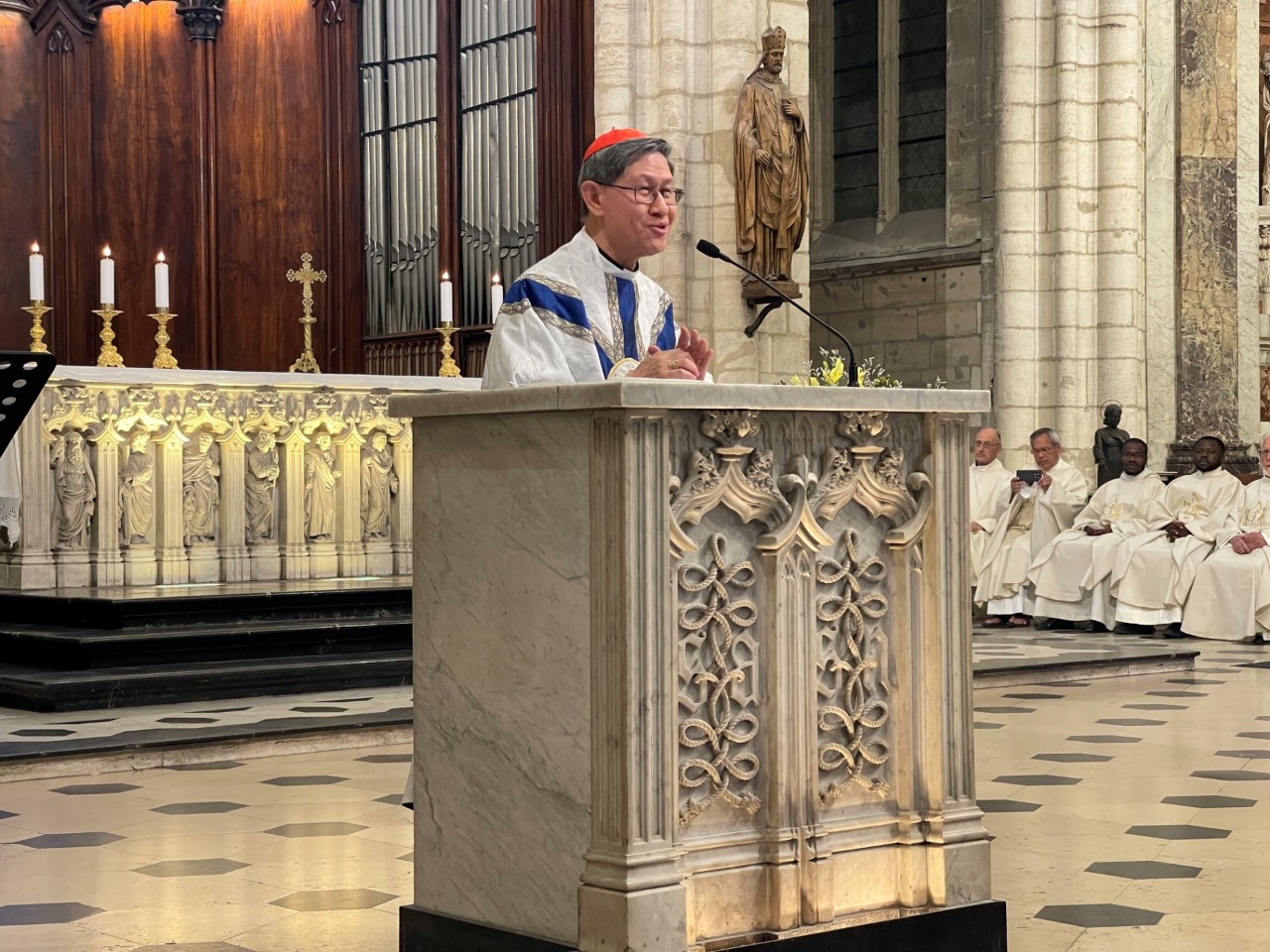
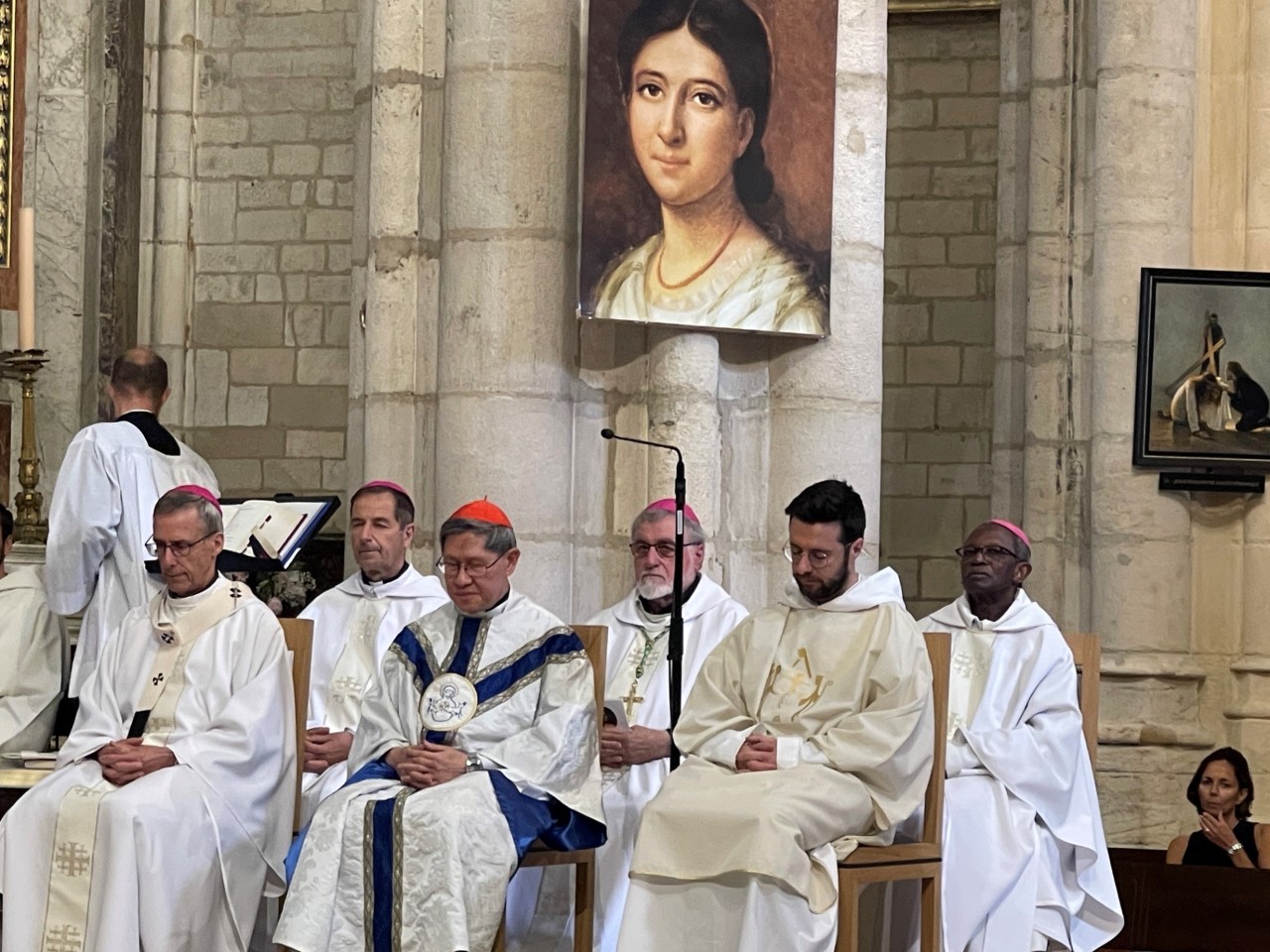
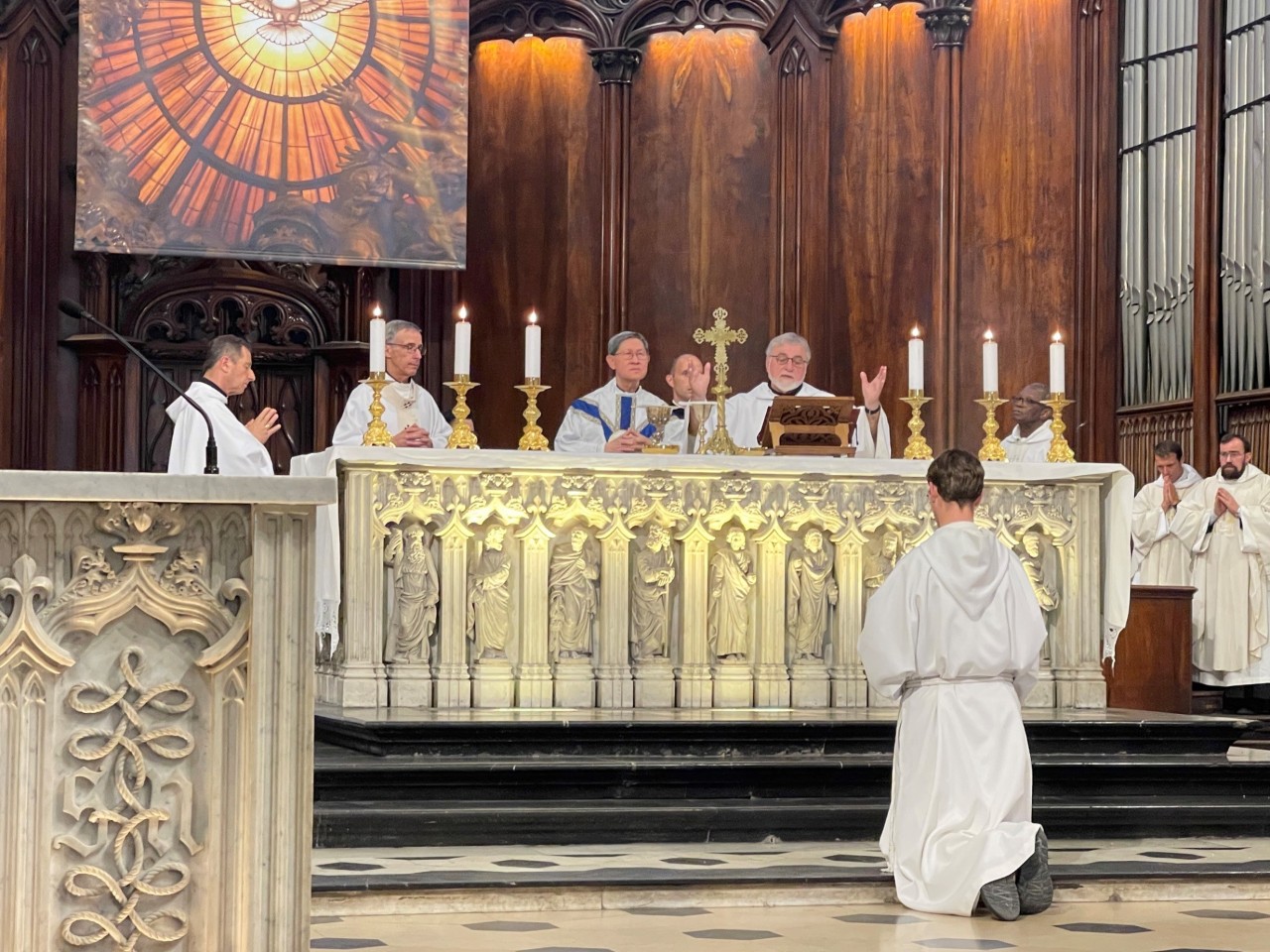
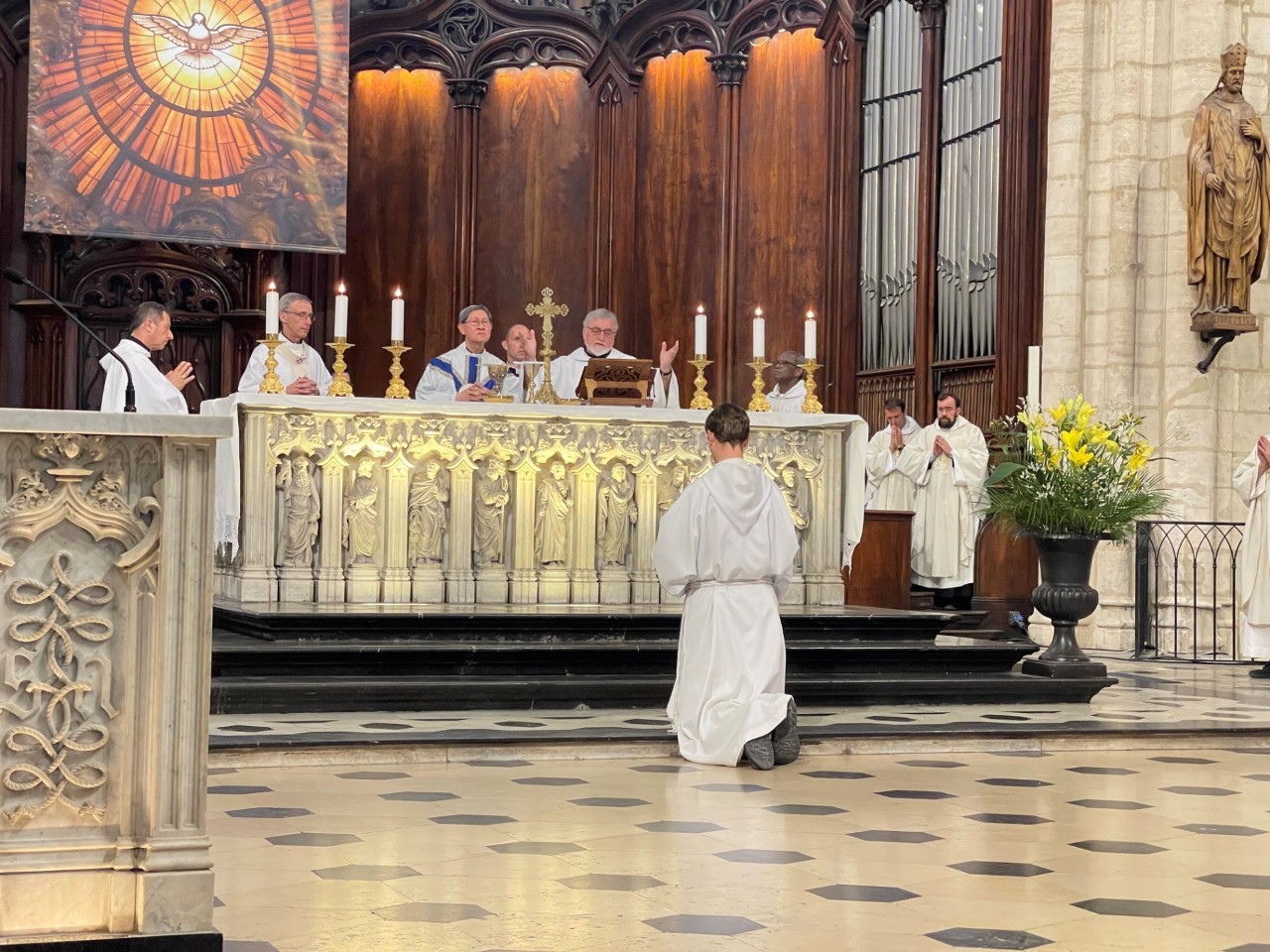
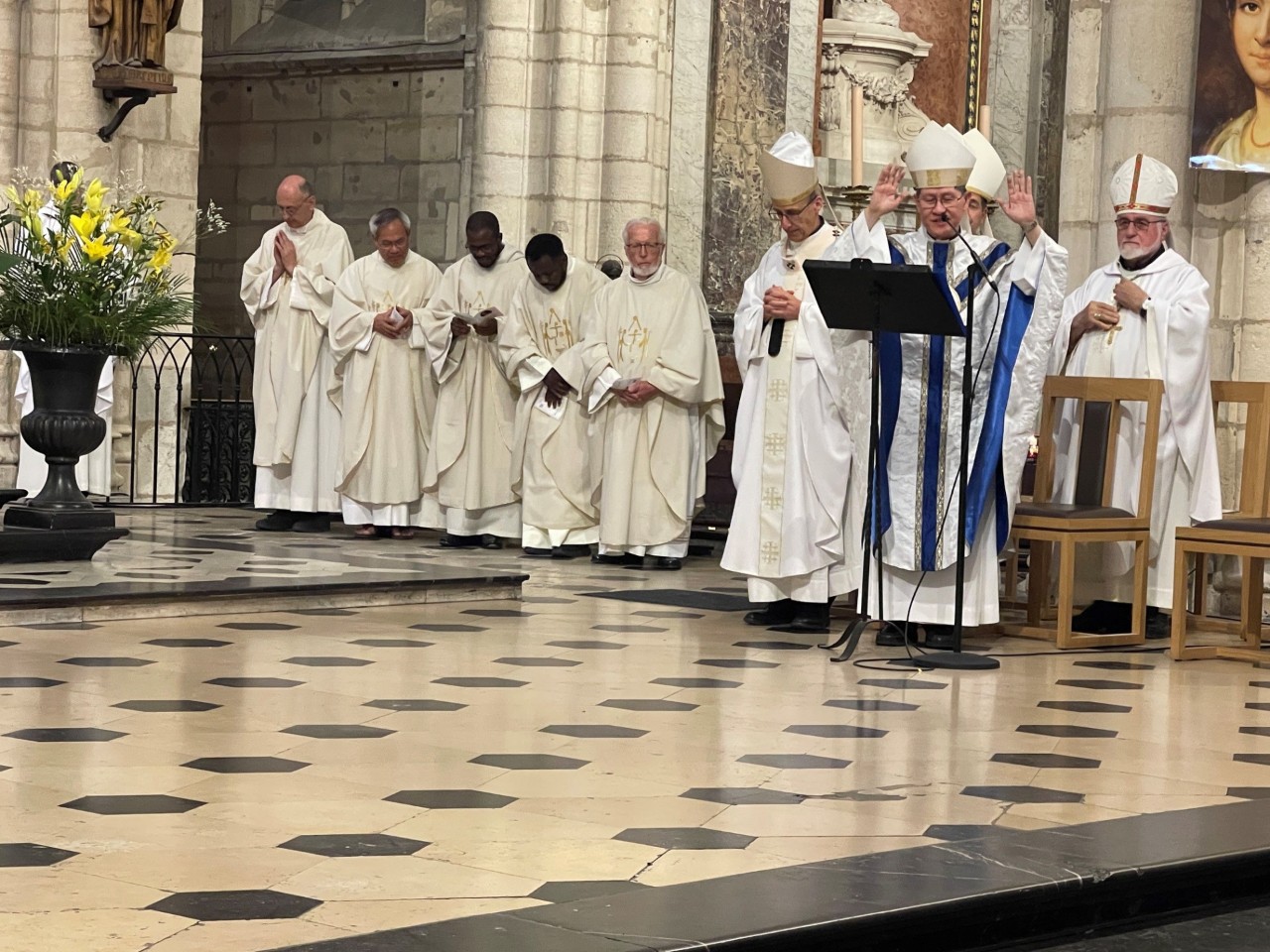
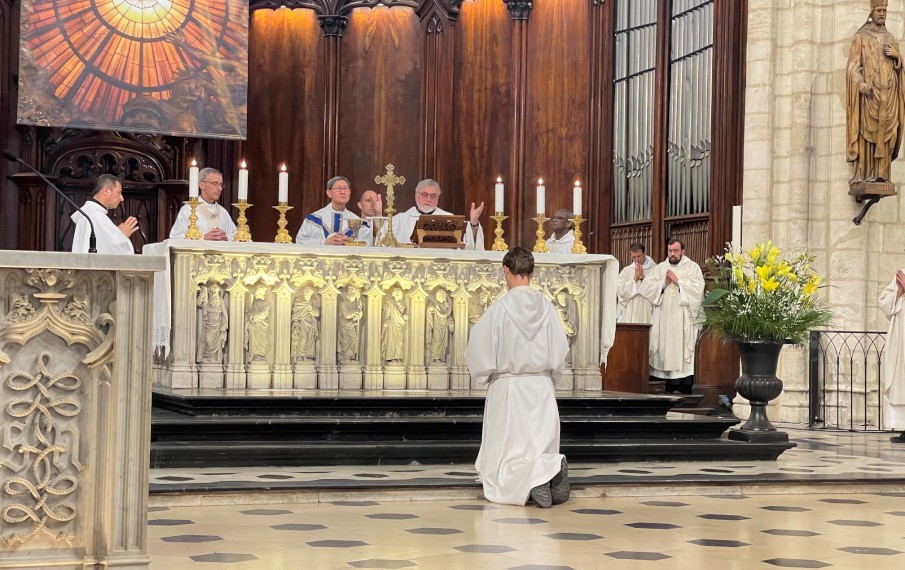
It was precisely here, in the heart of Lyon's Presqu'île, that Cardinal Tagle, Pro-Prefect of the Dicastery for Evangelization, presided over over a liturgical celebration of thanksgiving on Saturday, June 13 to mark the 200th anniversary of the Living Rosary.
At the beginning of his homily, the Cardinal placed this very celebration within the spiritual history initiated by Pauline: “We thank the Lord who has gathered us as a community in the Eucharist as we mark the bicentenary of the foundation of the Living Rosary by the Blessed Pauline Jaricot. A daughter ofLyon, she founded the Society for the Propagation of the Faith two hundred and four years ago.” Recalling that she was a member of the Third Order of Saint Dominic, the Cardinal praised her genius for “creatively transforming the devotion to the Holy Rosary as a spiritual force” to form communities that participate in “the mission of the Church through prayer, animation and acts of charity.”
Prayer that opens the doors of the Cenacle
How can the Rosary form missionaries? Drawing on the account in the Acts of the Apostles, a true source of living water when it comes to reflecting on the Christian mission, Cardinal Tagle first contemplated the small community gathered in the Cenacle: “We find the disciples with Mary the Mother of Jesus, some women and friends in the upper room or cenacle. As instructed by Jesus himself, they devoted themselves to prayer asthey awaited the Holy Spirit, the power from the Father, who would make them witnesses of Jesus to all the earth. The community of disciples was in the room not to hide but to wait for theHoly Spirit who would take out of the room to proclaim the Gospel.”
When the Spirit descended upon them, “their prayer became a testimony to the wonders God had accomplished in Jesus, spoken in different languages of the world”. From this springs an insight that is highly relevant to our times: “Brothers and sisters, prayer forms acommunity of people who are open to receive the Holy Spirit. True prayer opens hearts forcommunion with God, with fellow disciples and with the world”.
The Living Rosary is not a refuge for isolation, but a school of openness: “Prayer and worship should not divide disciples among themselves. Prayer does not isolate a community from the world but opens the doors and tongues for missionary testimony centered on Jesus”. The Cardinal entrusted both the memory and the future of this mission to the one who was at the heart of the evening’s liturgy: “Mary, who kept in her heart the memory of Jesus will help the missionary community to pray, to remember and to proclaim God’s great deeds.”
The Rosary, a missionary pedagogy
Cardinal Tagle then went on to explore the “missionary dimension of the Rosary”, referring to the various prayers that make up each decade. “I believe it is called the 'Living Rosary' because it is meant to form living communities that live their Christian mission,” he explained, highlighting the relevance of Pauline Jaricot’s insight.
The mysteries of the Rosary, first of all, immerse the faithful in the life of Christ: “Through the meditation on the mysteries, we join Jesus at different stages of his mission in the hope of acquiring his mind and heart as we fulfill our own mission.” The Lord’s Prayer then, purifies the heart of the disciple: “The Lord’s Prayer purifies our hearts so that they become like the heart of Jesus, the Son who seeks the glory, will and Kingdom of the Father. The Lord’s Prayer forms the hearts of brothers and sisters who will forgive as they ask for forgiveness.” In a world where “many people build their own kingdoms to make a name for themselves and in the process, they treat other people as objectsand slaves in dehumanizing and violent ways,” the Cardinal warned: “This is not Christian mission as stated in the Lord’s Prayer. Praying the Our Father and behaving as hypocritical kings cannot come together.”
The Hail Mary, repeated ten times in each decade, is, for the Pro-Prefect of the Missionary Dicastery, a school of mission “in Marian style.” The Cardinal recalled that the first words of this prayer echo Gabriel’s announcement: “Every time we pray the Hail Mary, we are assuming the role of God’s messenger, announcing the fulfillment of God’s plan of salvation and the role God offers to Mary in that plan. This prayer molds us to become God’s angels in our world today,coming close to people, affirming that they are blessed by God and chosen for a mission. “We should be angels of salvation, not of damnation,” he insisted, urging people to help each individual discover their mission, rather than “misleading them to false goals like fame, wealth, superiority, self-sufficiency and conquest.” “Do we still see God walking on our streets, greeting us through poor travelers, doing simple acts of kindness?” he asked. “Our world is full of distraction provided by social media, implosion of images, fake news, drugs, and vices. Having a serene and sensitive heartthat sees the visits of the Lord is missionary contemplation that becomes cooperation with God’s action.
Finally, the Glory Be to the Father provides the key to all Christian commitment: “Christian mission, marked by both wondrous deeds and suffering even unto death, is like a lamp that gives light to all. But Jesus reminds us, ‘Your light must shine before others,that they see your good deeds and glorify your Heavenly Father’.” Therefore, a mission that ends in self-glorification is not Christian mission. An authentic Christian mission must echo Mary’s song, ‘My soul proclaims the greatness of the Lord, my spirit rejoices in God my savior.’”
Vigil of nations around the Living Rosary
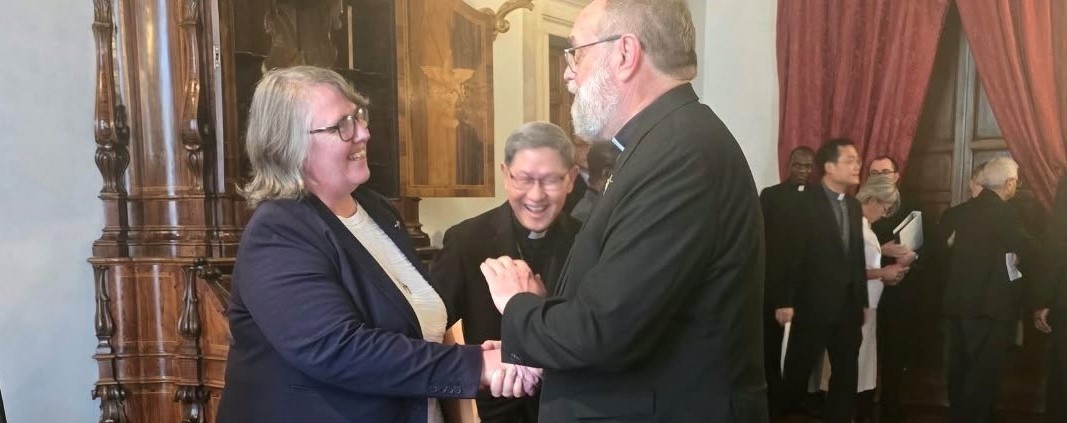
Before Mass, participants had the opportunity to delve deeper into the charism of the Living Rosary thanks to a lively conference by Father Dinh Anh Nhue Nguyen, OFM Conv., Secretary General of the Pontifical Missionary Union since 2021. He reminded them that “mission is everyone’s responsibility and that communion is the prerequisite for all missionary fruitfulness’, expressing the hope “that Blessed Pauline Jaricot may help us to renew this missionary heritage.”
“Can you imagine what a vast international network of ‘Roses’ praying regularly for the same missionary intentions would represent?” he asked. “Groups from Poland, France, Italy, Vietnam, the Philippines, Tanzania, Brazil, and Mexico could feel united in the same spiritual mission. This international dimension would allow us to concretely manifest what the Second Vatican Council calls the communion of particular Churches in the one mission of the universal Church.”
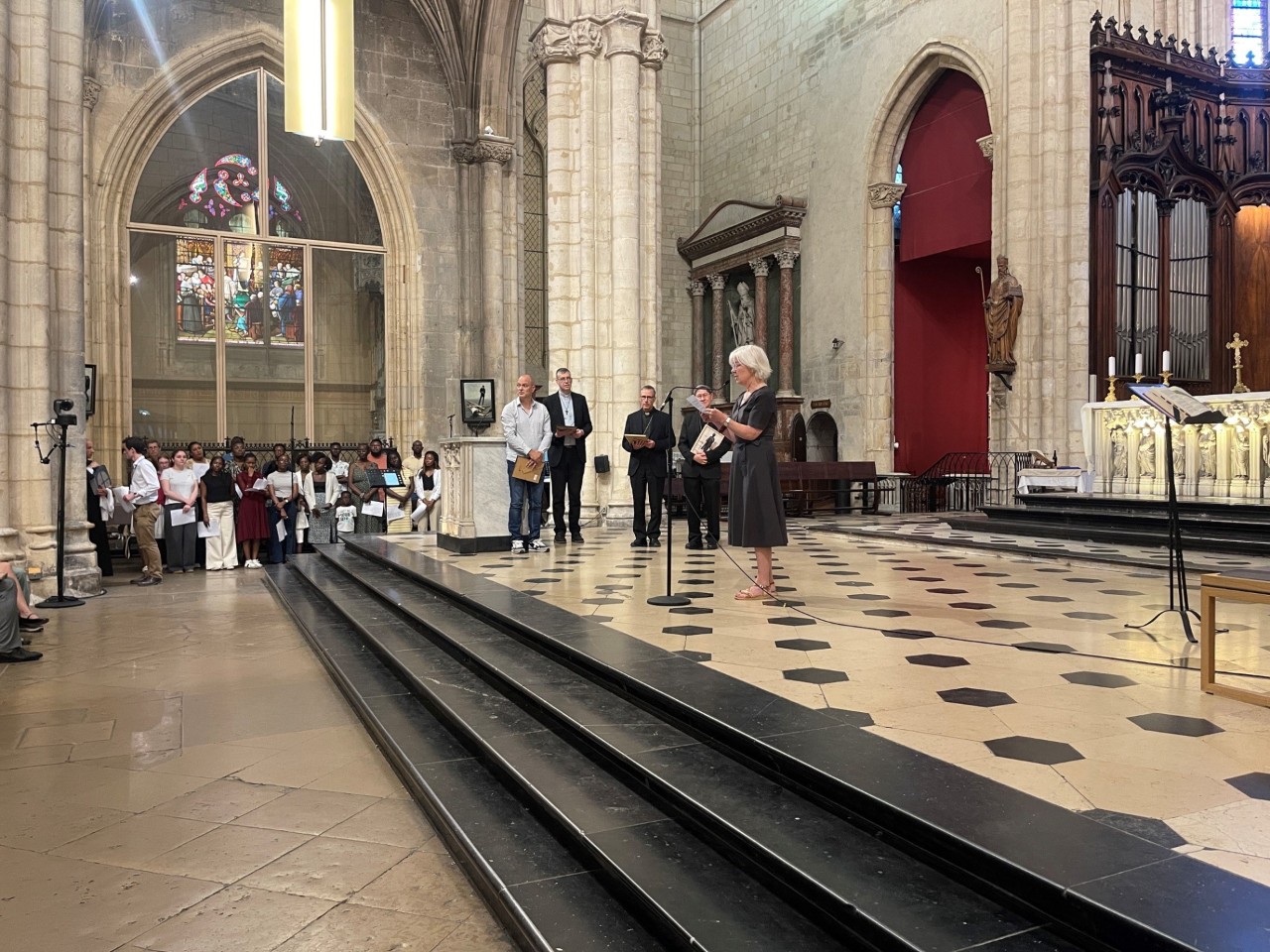
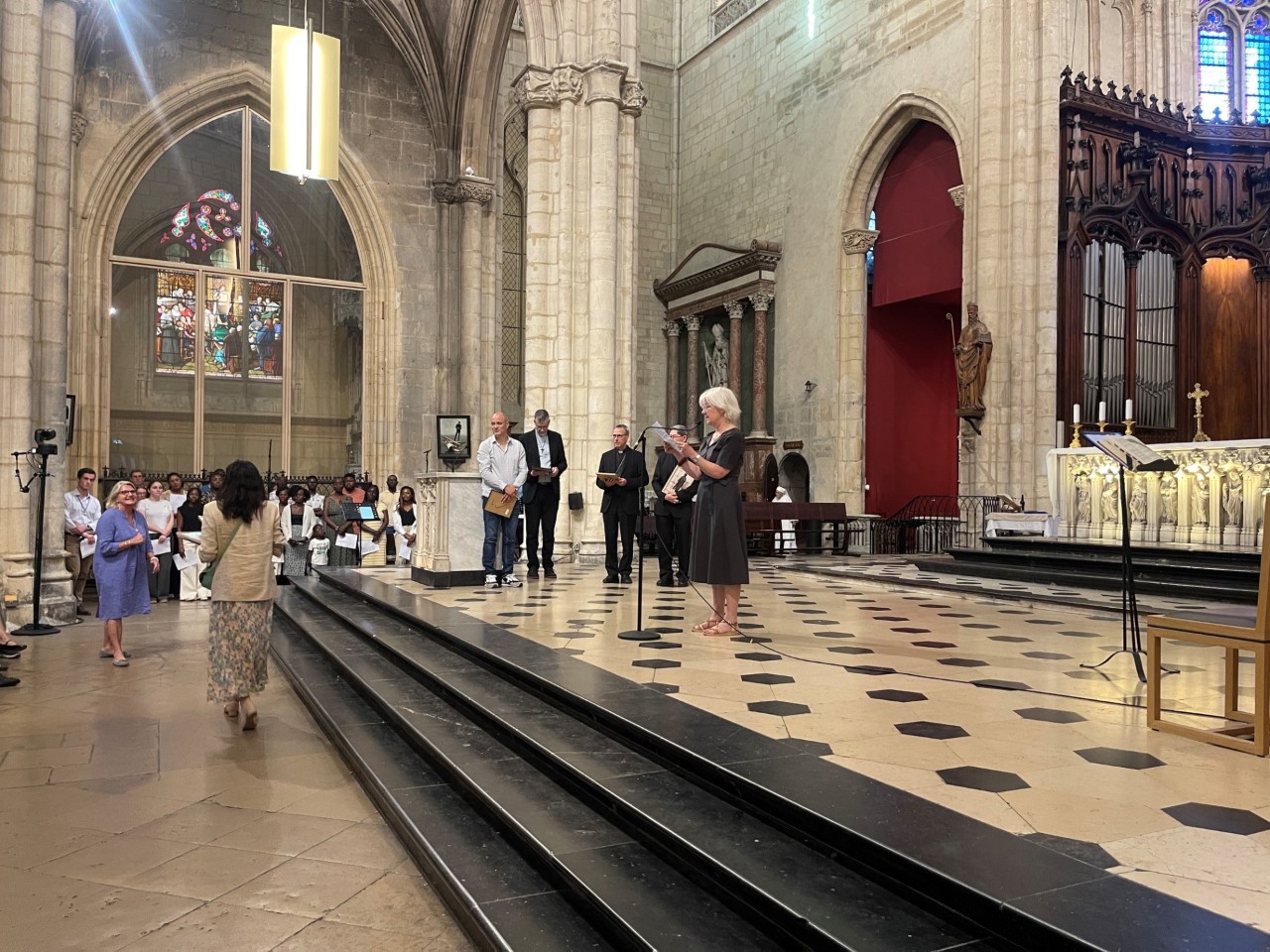
“After Mass, the evening continued with a vigil of testimonies illustrating the current fruitfulness of the Living Rosary on every continent. The bicentenari itself, prepared over many months by the Pontifical Mission Societies of France, allowed us to appreciate the diversity of this movement, which originated in Lyon and has spread throughout the world.
From Mozambique, Father Jorge Joaquim Pinho, head of the Pontifical Mission Societies in the country, described the still recent, but promising spread of this spirituality: “Based on my experience with the devotion to the Living Rosary, instituted by Blessed Pauline Jaricot in 1826, whose bicentenary we are celebrating this year, it is not yet a deeply rooted practice. However, in recent years, it has spread among mothers’ prayer groups… This devotion is also present among young couples.” In a context marked by pastoral challenges and sometimes violence, he has seen a proliferation of "numerous spontaneous prayer groups," some of which "have the Living Rosary as their hallmark," and he says he is determined, along with the Pontifical Societies in the country, to remain "firmly committed to disseminating and promoting" these initiatives.
Two volunteers in the Philippines, Gaétan and Gaëtane Javel, shared their experience with the ANAK-Tnk Foundation in Manila, founded by Father Matthieu Dauchez and dedicated to street children. "The ANAK-Tnk Foundation is helping street children in Manila; its mission is to restore dignity and the ability to love and be loved to these children, who are among the poorest of the poor,’ they explained, emphasizing that for them, home becomes "their family" for them, for those who often have had neglectful parents.
Every day, upon returning from school, “they recite the Rosary, meditating on each of the mysteries in turn.” “In reality, these children do not simply meditate on the mysteries of the Rosary,” they explained, “they are so united to Christ and his sufferings on the Cross that they experience in their very being the painful, but also luminous, joyful, and glorious mysteries of his life,” to the point of perfectly embodying “the Living Rosary,” “through the thousands of prayers offered each day at the foot of the Cross.” For this couple of volunteers, the greatest fruit of this daily prayer to Mary is “the resurrection of the hearts of these children, so wounded by the great mystery of evil.”
“A missionary contemplation” that saves
The vigil concluded with the moving testimony of Emmanuel Tran, a father whose life was turned upside down when his three-and-a-half-year-old daughter, Mayline, fell into a coma after choking following a domestic accident. He recounted how the Living Rosary, accompanied, unknowingly, Mayline’s unexpected recovery, a girl whom doctors had given no hope of survival, while he himself experienced a personal encounter with Christ, leading him to request baptism. At the time, he did not know Pauline Jaricot. He only discovered her existence some time after Mayline’s recovery. “The further we went in life, the more we felt God’s constant presence,” he recounted. “The people who accompanied us to the hospital were devout believers, and at the time we did not see all of this. We discovered it little by little. Today, my wife Nathalie and I pray a decade every day.” “I realized afterward that when you pray, you have the impression of being alone at the bedside of a sick child or parent. When you leave the room, you think you are all alone, but in reality, you are not. If we could truly see, we would see that millions of people are praying, and that prayer unites the men and women of this world.” These words resonated perfectly with those spoken earlier by Cardinal Tagle: the encouragement to enter into a “missionary contemplation,” capable of “perceiving the Lord’s visits” even in the trials of life.
The ever-renewed listening to the promise made by Christ: “Go, therefore and make disciples of all nations, baptizing them in the name of the Father and of the Son and of the Holy Spirit, teaching them to observe all that I have commanded you. And behold, I am with you always, to the end of the age.”