URUGUAY: BELLS, LIGHT AND A PEOPLE SETTING OUT ON MISSION AGAIN AFTER THE VISIT OF LEO XIV
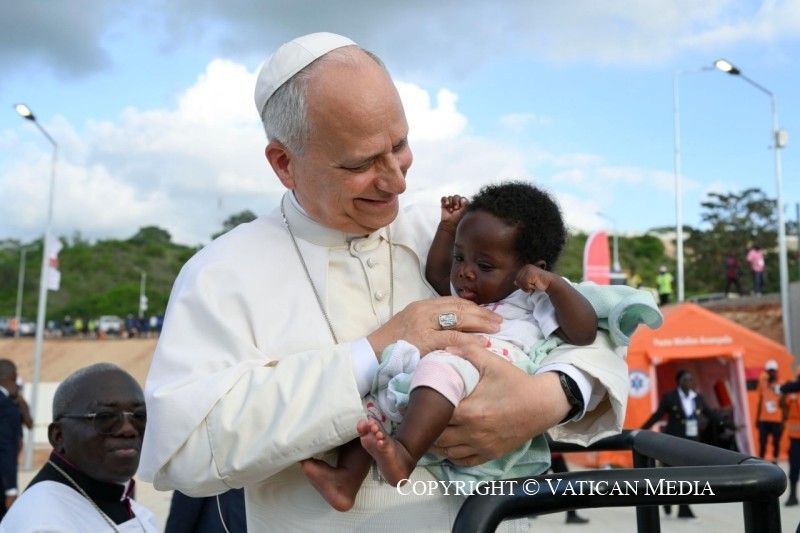
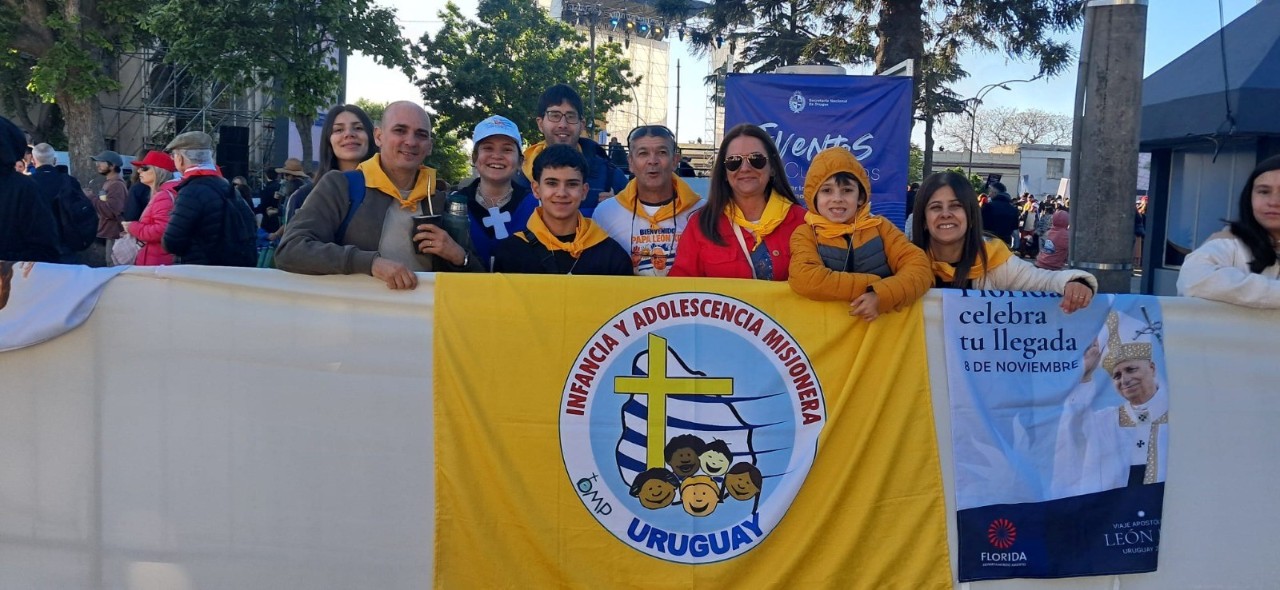
For months, Uruguay had been preparing to welcome Pope Leo XIV. In parishes, people prayed for his visit at the end of Mass. Communities made preparations, volunteers worked, and families waited. And when, on the afternoon of 6 November, the papal plane landed at Carrasco International Airport, church bells began ringing throughout the country. It was an emotion difficult to describe: at last, the Pope had arrived.
A historic moment for this small South American nation, known as one of the most secular societies in Latin America. A country where Christmas is officially called “Family Day”, Epiphany “Children’s Day”, and Holy Week “Tourism Week”. And yet, right here, the visit of the Successor of Peter awakened extraordinary joy and participation.
In Montevideo’s historic Plaza Independencia, the President of the Republic, Yamandú Orsi, welcomed the Pontiff with words that sincerely presented the history, achievements and challenges of Uruguayan society, while also acknowledging the Church’s contribution to the common good.
In his first address, Leo XIV referred to the figure of José Gervasio Artigas and the exodus of the Eastern people, inviting everyone to reflect on the mutual responsibility that makes it possible to build a shared history. He did not overlook the country’s wounds: loneliness, suicide, family difficulties, poverty and suffering. He recalled that the Church wishes to continue offering the Uruguayan people what it has received: Jesus Christ and the hope of the Gospel.
A small Church that becomes an example for the world
A particularly meaningful moment took place during Vespers in Montevideo Cathedral. The Pope recalled that in 2024 the interdiocesan seminary had received no new candidates. Faced with this reality, many communities had begun organising days of prayer and fasting for vocations. Today, new young people have embarked on the path towards the priesthood and consecrated life.
Leo XIV wanted to present this experience as an example for the whole Church, inviting bishops around the world to promote similar initiatives. A small country, a Church that is a numerical minority, thus became a witness of hope for other Christian communities.
The visit also revealed the concrete face of a Church close to the wounds of its people. In the Casavalle neighbourhood, one of Montevideo’s most vulnerable areas, the Pope met families marked by poverty and violence, but also by solidarity and hope. In response to the testimonies he heard, he recalled the example of Father Cacho, a priest who had dedicated his life to the poorest, and issued an appeal not to remain indifferent: “We cannot walk past when we know that there are children in Uruguay who do not go to school because they are afraid they will not return.” It was an invitation to the Church, society and the State to build together a homeland of brothers and sisters.
Shortly afterwards, at the Catholic University of Uruguay, meeting representatives of the education sector, Leo XIV recalled the visit of Saint John Paul II, which had taken place thirty-eight years earlier. He encouraged educators and students always to put the dignity of the person at the centre, even when facing the challenges of new technologies and artificial intelligence. And he offered them an invitation that reaches beyond university classrooms: “We are not allowed to stop.” Educating, like evangelising, means continuing on the journey and forming people capable of building peace and hope.
But perhaps one of the most moving images of the journey will remain that of Montevideo’s Centenario Stadium. In a very short time, after registration opened, all available places had been taken. The stadium, a symbol of Uruguay’s passion for football, was transformed into a great place of prayer. Young people, adults, families, people moved to tears. The Pope recalled that even a small community can illuminate the world: “To shine brightly, it is not necessary to be many, but to reflect the light of the Lord.” And he urged the faithful not to be afraid to bear witness to Christ in a society where many live far from the faith.
In Paysandú, on the banks of the Uruguay River, Leo XIV chose three images deeply connected with people’s everyday lives: the bridge, the palm groves and mate. The bridge as an invitation to unite and build bonds; the palms, which grow together, as an image of the Christian community; and mate, shared in homes and among friends, as a symbol of fraternity, welcome and encounter. In simple words, the Pope showed how mission begins precisely in everyday life.
“Uruguay: it is time to set out!”
The final stop, in Florida, before Our Lady of the Thirty-Three, Patroness of the country, became a true sending forth on mission.
The Pope remembered mothers, grandmothers, catechists and the many women who, often quietly, have safeguarded and passed on the faith, even when their children and grandchildren have drifted away from the Church. He offered them words of encouragement: “Do not consider what you have sown to be lost.”
Then, contemplating Mary as she rises and sets out in haste to visit Elizabeth, Leo XIV spoke words destined to remain in the heart of the Uruguayan Church: “Uruguay: it is time to set out! We must return to people’s homes, draw close to them, listen to their questions and bring them Christ!”
Perhaps this is the greatest gift of the three days spent with the Successor of Peter. A country that waited with emotion, rang its bells to welcome the Pope and filled a stadium to pray is now being called to go out, to meet others and to proclaim the Gospel.
The bells announced his arrival. Now it is up to the Christians of Uruguay to make the joy of the Gospel resound through their lives.
Suor Jolanta Elżbieta Płomińska, National Director PMS URUGUAY